
Tariffs bite into tax refunds
The tax man giveth but the tariff man taketh away

I’ve spent a lot of time in this newsletter tracking the surge in tariff revenue stemming from President Trump’s new trade policies. With tax filing season now underway, though, it’s time to put on my tax policy hat too. Most of the discussion this year has focused on the larger tax refunds filers will see because of the retroactive tax cuts Congress enacted in the One Big Beautiful Bill Act. While refunds are set to rise, tariffs will take a big bite out of those tax cuts.
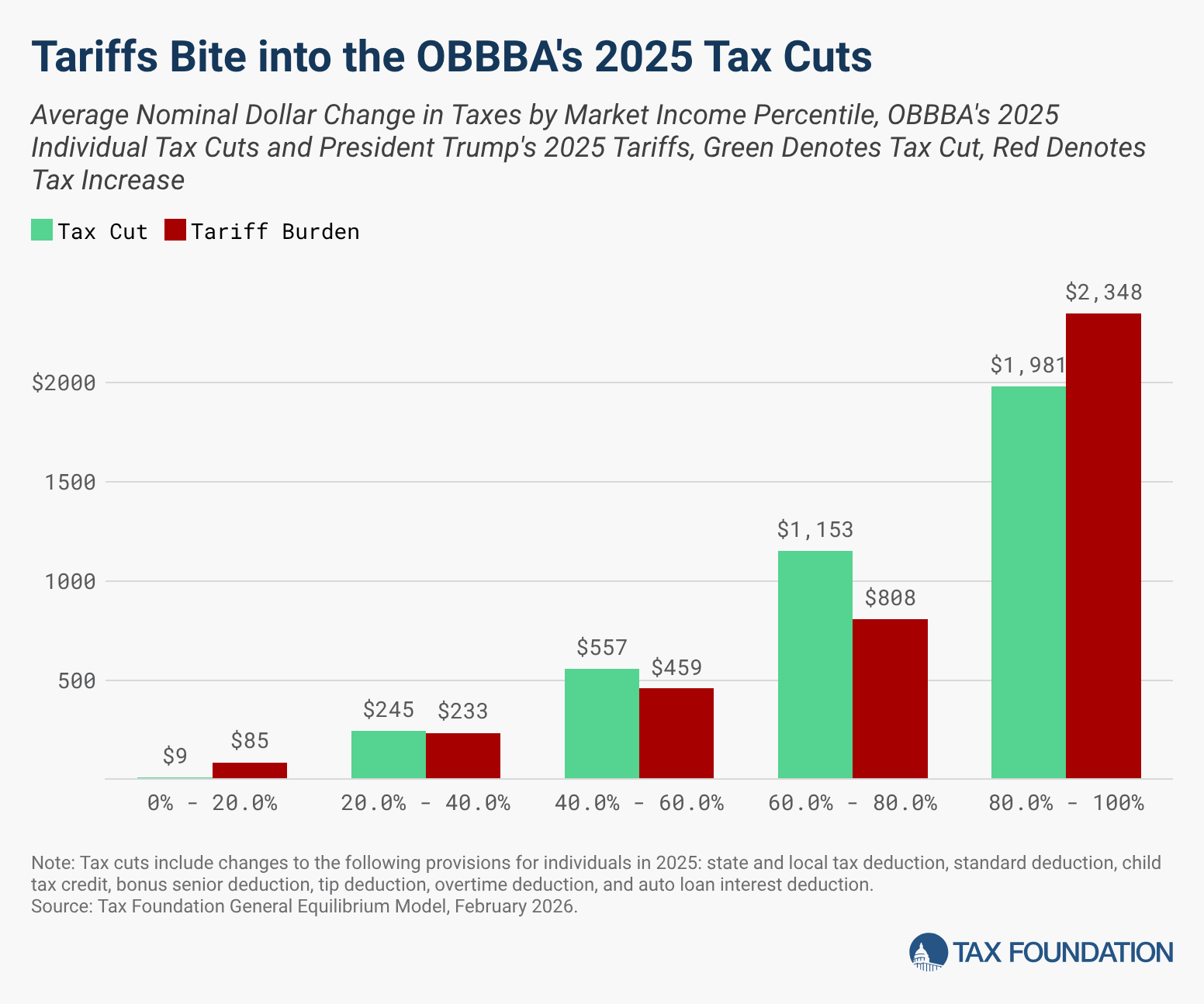
We estimate the seven major retroactive provisions amount to a $129 billion tax cut for 2025—much of which will show up as tax refunds. Filers in the bottom 20 percent will see only small changes on average, since they already have little or no income tax liability and therefore benefit less from expanded deductions and credits. Filers in other income groups receive average tax cuts ranging from $245 to $1,981.
While the income tax relief may be welcome, much of it is offset by higher tariffs, which we estimate raised taxes by about $132 billion in 2025. For the middle three income groups, the President’s tariffs erase between 70 percent and 95 percent of the tax cut. Lower-income filers are, on average, worse off under the combined effect of the tariffs and tax cuts in 2025.
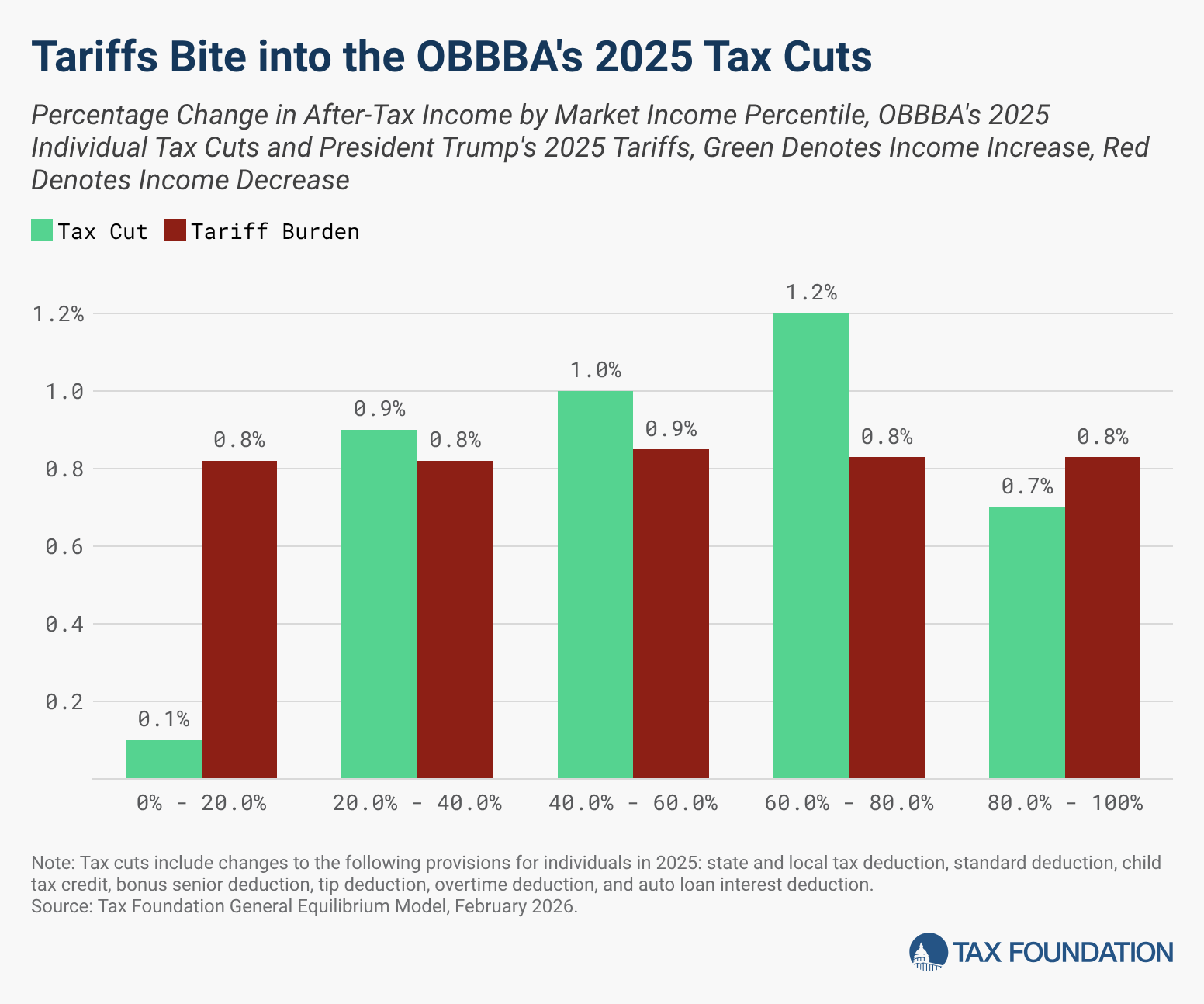
Looking at percentage changes in after-tax income tells a similar story. Tariffs are a relatively flat and somewhat regressive form of taxation, and the new tax law delivers larger income tax cuts for upper income groups than for the bottom quintile. Taken together, the combination of tariffs and OBBBA made the tax system less progressive in 2025.
The tax man giveth but the tariff man taketh away.