
Trade Policy Uncertainty Isn’t Going Anywhere
Trade Tracker #10

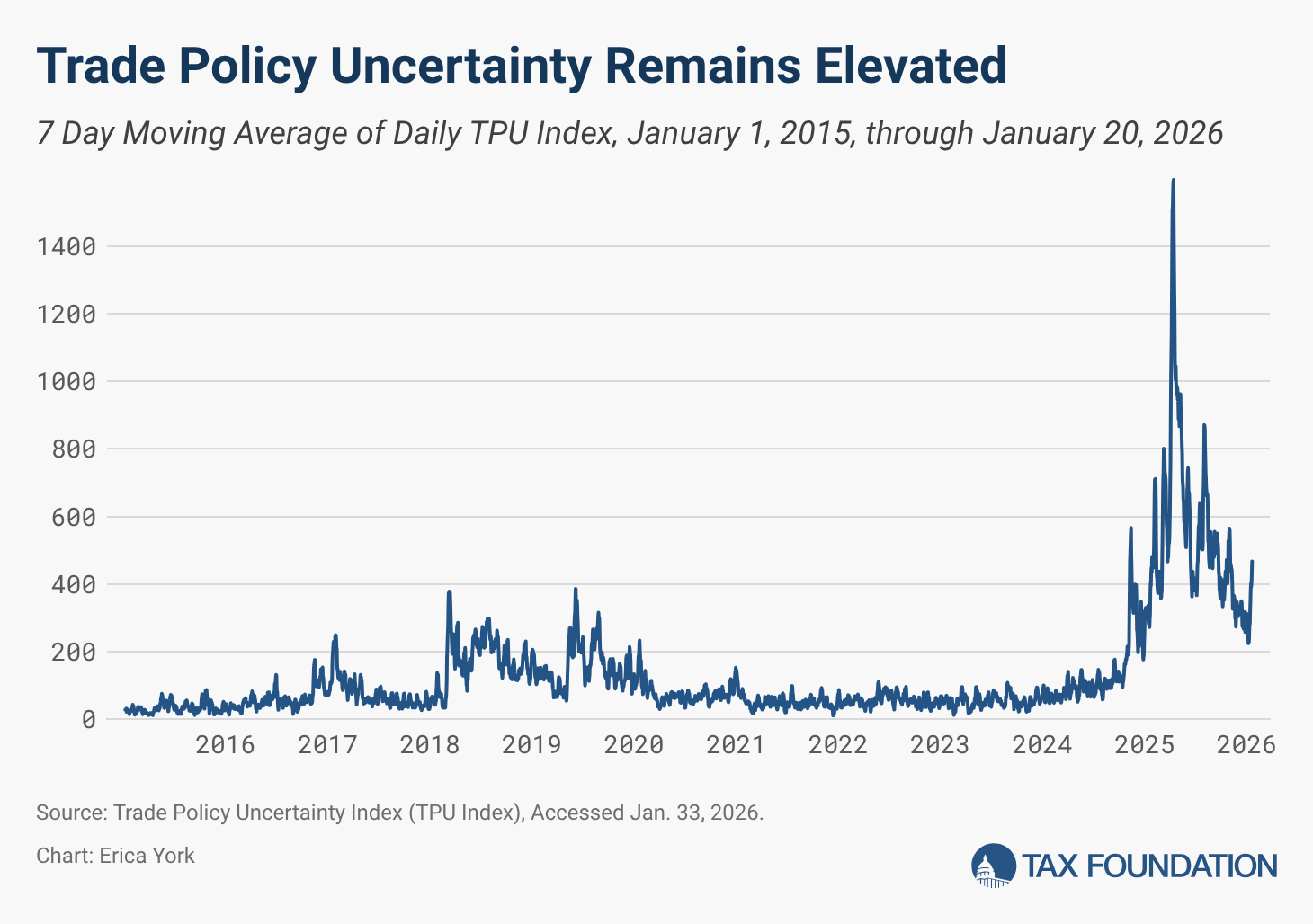
If the last week taught us anything, it is that trade policy uncertainty will remain elevated in 2026. It was another week of chaos, marked by no decision from the Supreme Court on the president’s tariff authority and by the president backing down from a tariff threat against eight European allies over his territorial dispute for Greenland. Indeed, the trade policy uncertainty index edged up for the week—and remains significantly above readings in more normal times. And that was all before Saturday’s threat of 100 percent tariffs on Canada.
Even when the president backs down from tariff threats, the fallout from those threats is not fully contained. An erratic, uncertain policy environment can itself act like a tax on economic activity, discouraging business investment and eroding trust and confidence in the US.
Looking ahead, this week the BEA will release the US International Trade in Goods and Services report for November 2025, providing an updated look at imports, exports, and the balance of trade for the month.
Recall October’s report showed a decline in the overall US trade deficit, which was largely explained by an uptick in gold exports. Goods imports in October totaled $255 billion, while customs duties paid totaled $31.3 billion, leading to the highest observed monthly effective tariff for the year so far at 12.3 percent.
Even though TACO is all the talk after the latest tariff threat backdown cycle, the effective tariff rate in October was more than 5 times higher than when Trump took office in January. He doesn’t always chicken out.
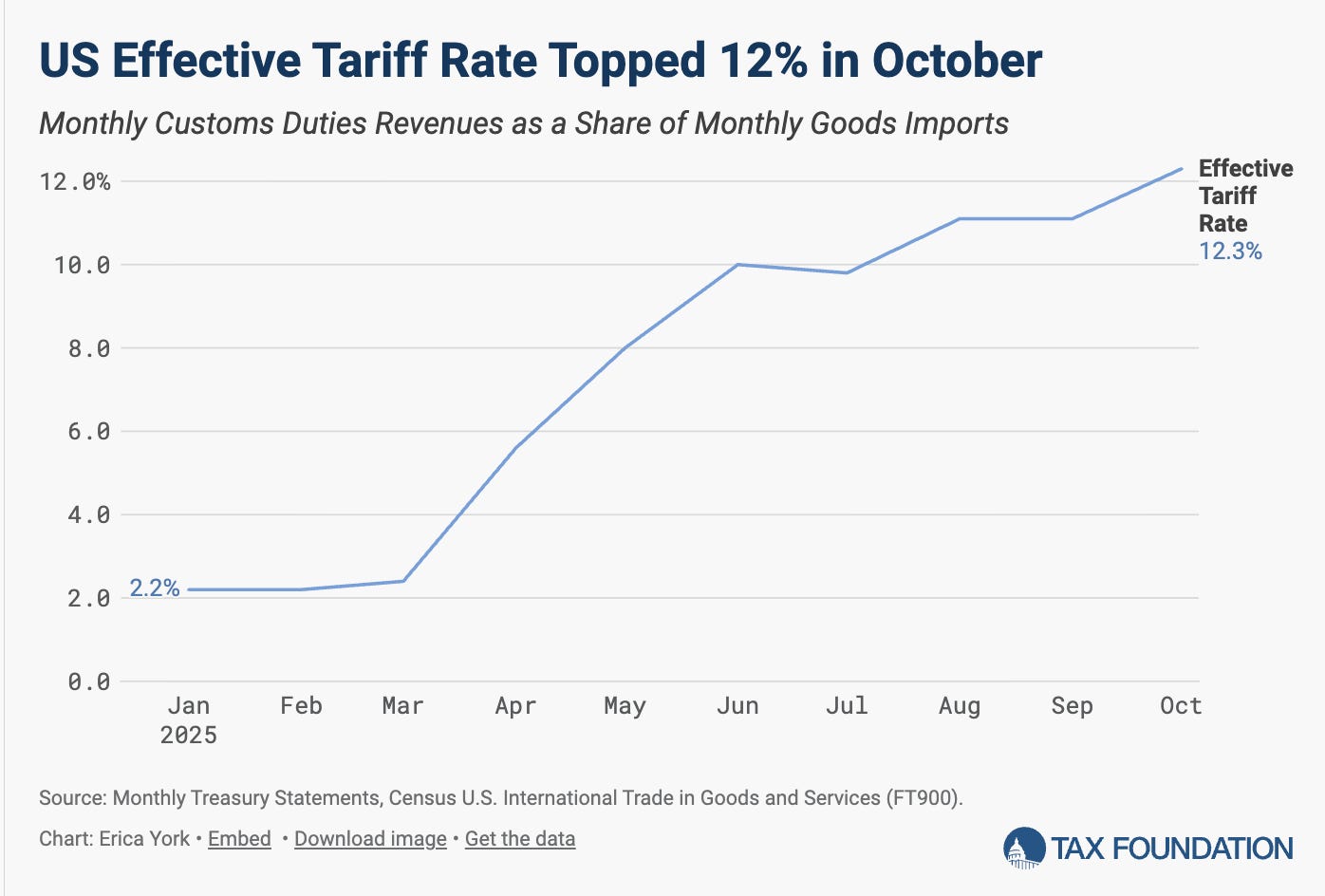
In November, customs duties collections declined by about 2 percent to $30.8 billion; if November imports declined by a similar magnitude, then the US effective tariff rate could remain above 12 percent for the month.
Also this week, the procedural prohibitions that had been preventing the House of Representatives from voting on the emergency declarations behind the president’s emergency tariffs will expire. This paves the way for the House to vote on resolutions that would terminate those emergencies—as the Senate has already done. No votes are yet scheduled in the lower chamber, but they could come up as soon as the prohibition expires after January 31.